Débitos automáticos para empresas
Planes de suscripción con débito automático para empresas que gestionaban sus cobros de forma manual, cliente por cliente.
- Producto
- Allaria+, plataforma de pagos y cobros
- Mi rol
- Product Designer, de principio a fin
- Equipo
- 2 PM, UX de apoyo y 12 devs
- Duración
- 6 meses hasta el MVP
- Resultado
- 30+ empresas, con cientos de suscriptores cada una
Resumen en 30 segundos
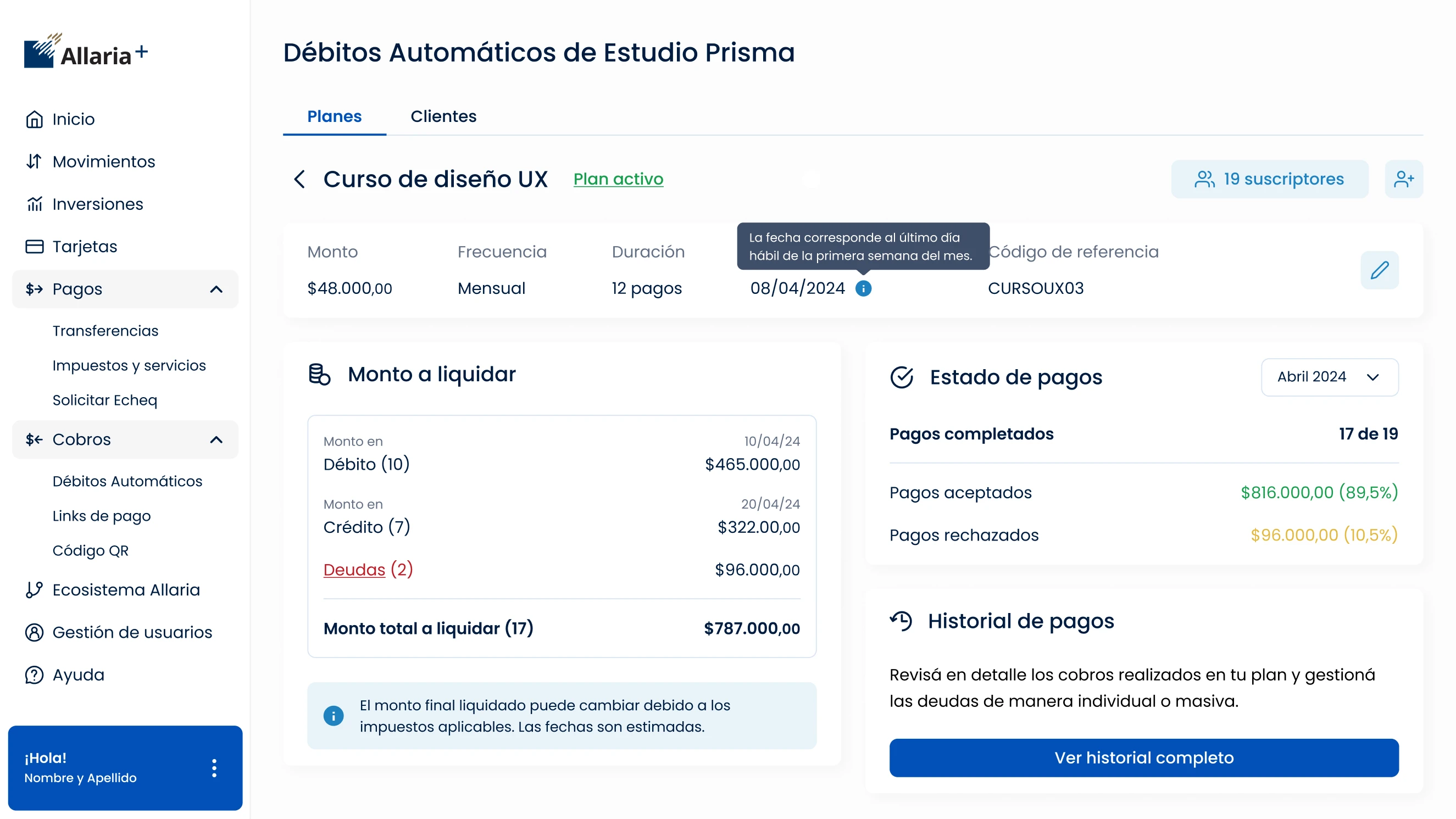
Una constructora necesitaba cobrar cuotas recurrentes a sus clientes. Como ella, muchas empresas registraban a sus clientes en una planilla de Excel y gestionaban cada cobro de forma individual. Diseñé un producto de débitos automáticos para planes de suscripción: carga masiva de clientes, cobro automático y gestión de pagos rechazados. Las decisiones clave salieron de unas 12 entrevistas con constructoras, universidades e instituciones de cursos, y con sus equipos de cobranzas.
- 12 entrevistascon clientes y equipos de cobranzas
- 6 meseshasta el lanzamiento del MVP
- 3 decisionesde diseño clave
- 30+ empresaslo usan hoy
Contexto y problema
El proyecto surgió a partir del pedido de ECIPSA, una constructora que necesitaba cobrar cuotas recurrentes a sus clientes de forma automática. Las áreas de negocio y producto de Allaria+ identificaron una oportunidad más amplia y presentaron la idea a otros clientes, como universidades, instituciones de cursos y otras constructoras, que mostraron el mismo interés.
En todos los casos, el cobro recurrente se gestionaba de forma manual. Para una empresa con cientos de clientes, este seguimiento implicaba un esfuerzo operativo constante, y cada pago que no se detectaba a tiempo afectaba sus ingresos.
Antes, en cada ciclo y por cada cliente
Con débitos automáticos
En cada ciclo de facturación, la empresa usaba una planilla de Excel para saber quién debía y cuándo, contactaba a cada cliente con un link de pago o un pedido de transferencia, y verificaba los comprobantes a mano.
El objetivo: permitir que una empresa creara un plan de suscripción, adhiriera a sus clientes y les cobrara automáticamente en cada ciclo (semanal, quincenal, mensual o anual), con intervención solo ante un pago rechazado.
Mi rol y el equipo
- Entrevisté a clientes y equipos de cobranzas
- Armé los flujos y validaciones con Producto y UX
- Presenté los avances cada semana a frontend y backend
- Diseñé las pantallas, el prototipo y los emails
- Validé el prototipo con ECIPSA antes del handoff
- PM y comercialesVisión del producto y necesidades de los clientes
- ClientesUnas 12 entrevistas con clientes y equipos de cobranzas
- Producto y UXApoyo en las entrevistas, diseño de flujos y validaciones
- DesarrolloReuniones semanales con frontend y backend
Hallazgos de las entrevistas
Entrevisté a los clientes y a las personas de sus equipos de cobranzas para entender cómo cobraban día a día y qué necesitaban. En Allaria+ la masividad siempre se daba por hecha, porque nuestros clientes eran grandes y cada uno tenía muchos clientes propios. Las entrevistas permitieron identificar los problemas concretos.
- Las bases de clientes ya existían
Constructoras, universidades e institutos tenían cientos de clientes en sus propias bases. Necesitaban migrarlos de forma masiva, sin cargarlos uno por uno.
- Las deudas también eran masivas
Cuando se rechazaban varios pagos, resolverlos uno por uno no era viable. Necesitaban gestionar varias deudas a la vez.
- Las deudas se saldaban por distintos medios
Algunos clientes pagaban con link de pago y otros por transferencia; el producto debía contemplar ambos casos.
Estas necesidades se repitieron en muchas de las entrevistas. Por eso, la carga masiva y la gestión múltiple de deudas formaron parte del núcleo del producto desde el MVP.
Restricciones
- Tiempo de desarrollo
No era posible construir todo para el lanzamiento. Pausar o reactivar clientes y anular cobros quedaron para después del MVP, y los sumamos en las iteraciones siguientes.
- Pagos fuera del sistema
Allaria+ solo registraba los pagos hechos con su propio link de pago. Las transferencias y otros medios externos no quedaban registrados.
- Distintos motivos de rechazo
Una tarjeta puede rechazarse por falta de fondos o porque está vencida o cancelada, y cada caso requería una solución diferente.
Tres decisiones clave
Decisión 1Masivo, pero simple de usar
El problema: las empresas tenían cientos de clientes en sus propios sistemas. Cargarlos uno por uno hacía inviable la adopción del producto.
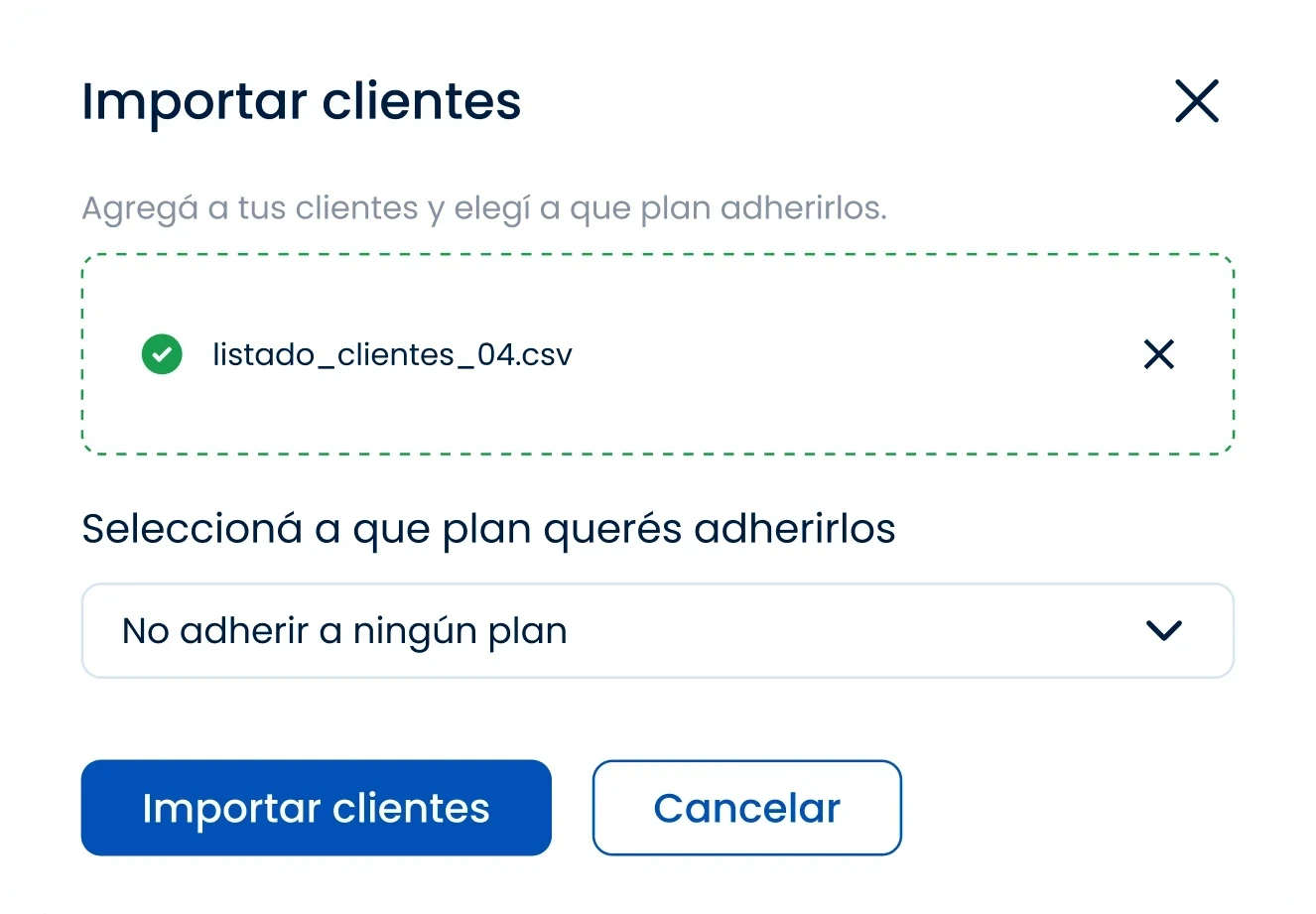
La decisión: diseñé dos formas de incorporar clientes: una manual, para altas puntuales, y una masiva, en la que la empresa importa su listado en CSV y elige a qué plan adherirlos. También es posible adherir varios clientes a un plan en una sola acción.
Por qué: en Allaria+ la masividad era un requisito; el desafío de diseño era resolverla sin sumar complejidad. Además, fue la necesidad más mencionada en las entrevistas: sin carga masiva, el producto automatizaba el cobro, pero no resolvía la puesta en marcha.
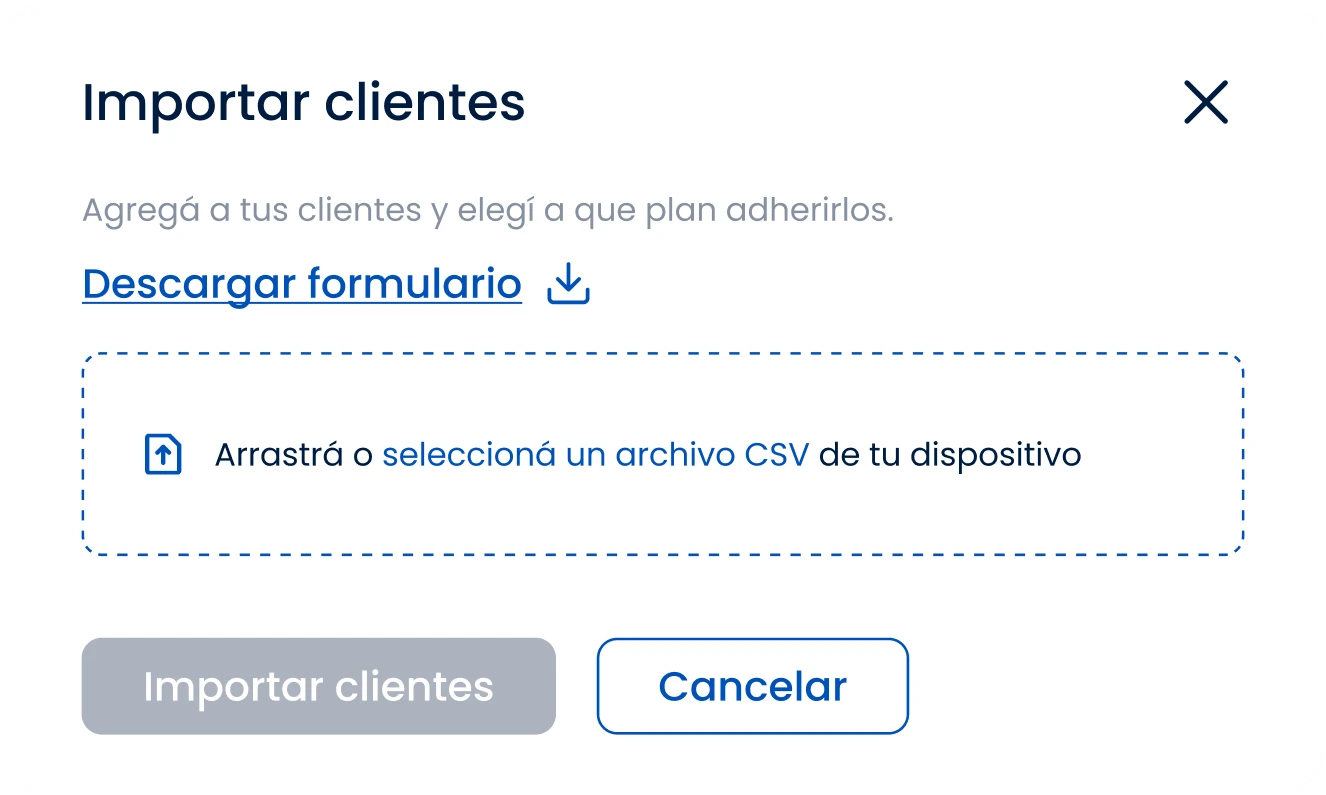
1Sube el listado en CSV
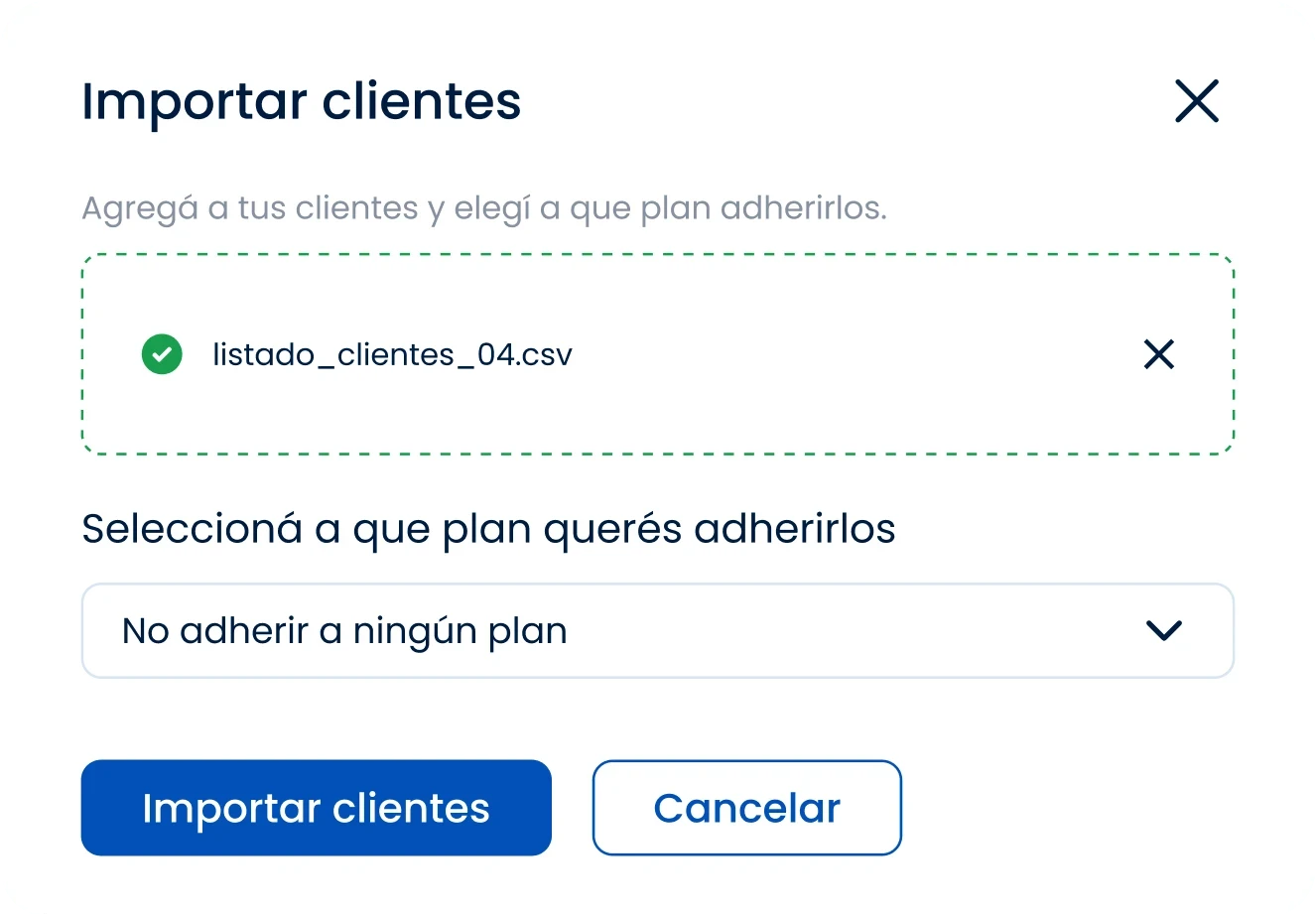
2Elige el plan en el mismo paso

3Clientes importados y adheridos
Decisión 2Rechazos temporales y permanentes
El problema: ante un débito rechazado, la causa define la solución. Una tarjeta sin fondos puede funcionar el mes siguiente; una tarjeta vencida o cancelada, no.
La decisión: diseñé un flujo distinto para cada caso.
- Rechazo temporal: el suscriptor salda la deuda con un link de pago o por otro medio, y los cobros siguientes continúan con la misma tarjeta.
- Rechazo permanente: si salda la deuda con una tarjeta nueva, esa tarjeta pasa automáticamente a ser su medio de pago para los próximos cobros. Así resuelve la deuda y actualiza su medio de pago en una sola acción.
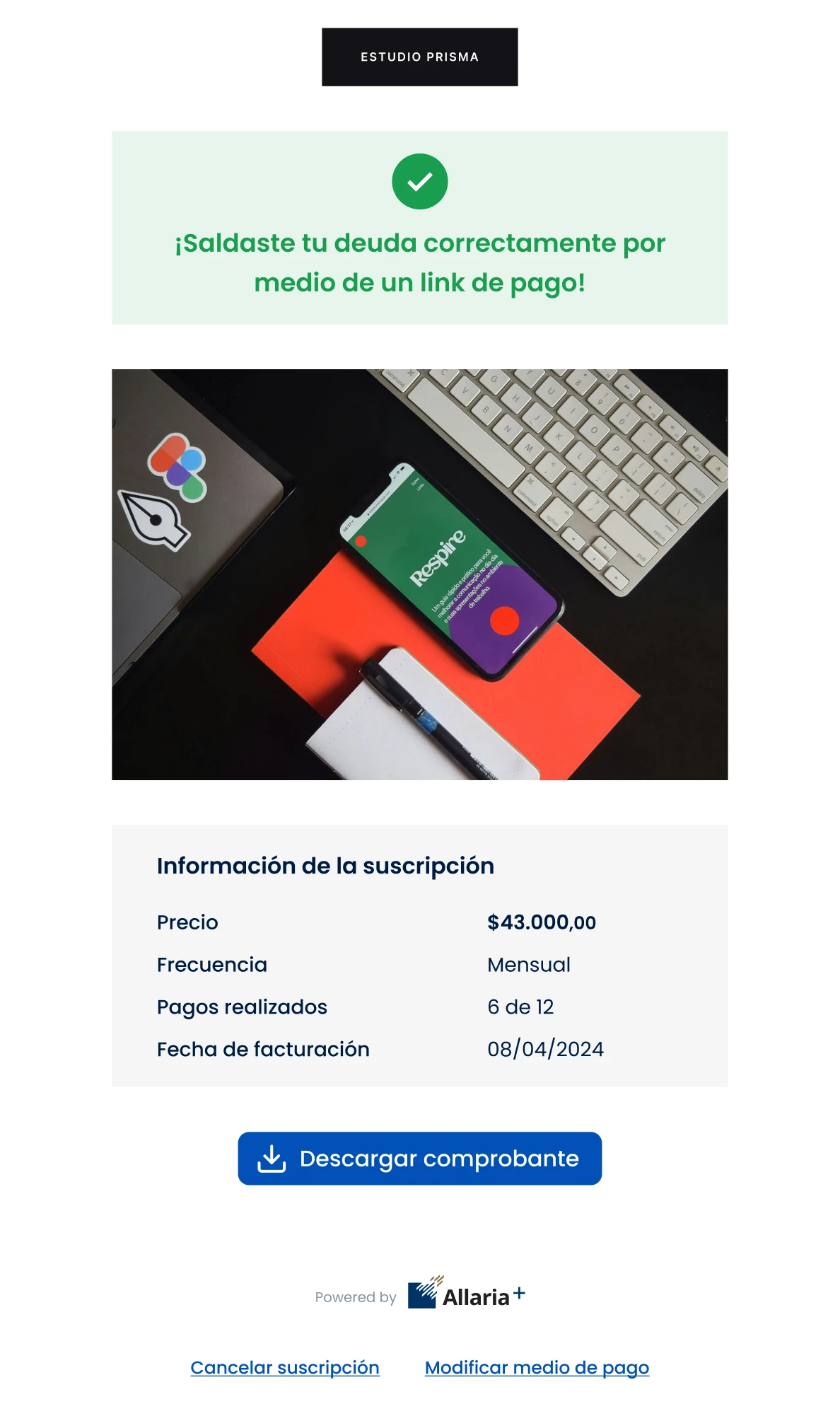
1Salda la deuda y sigue con la misma tarjeta
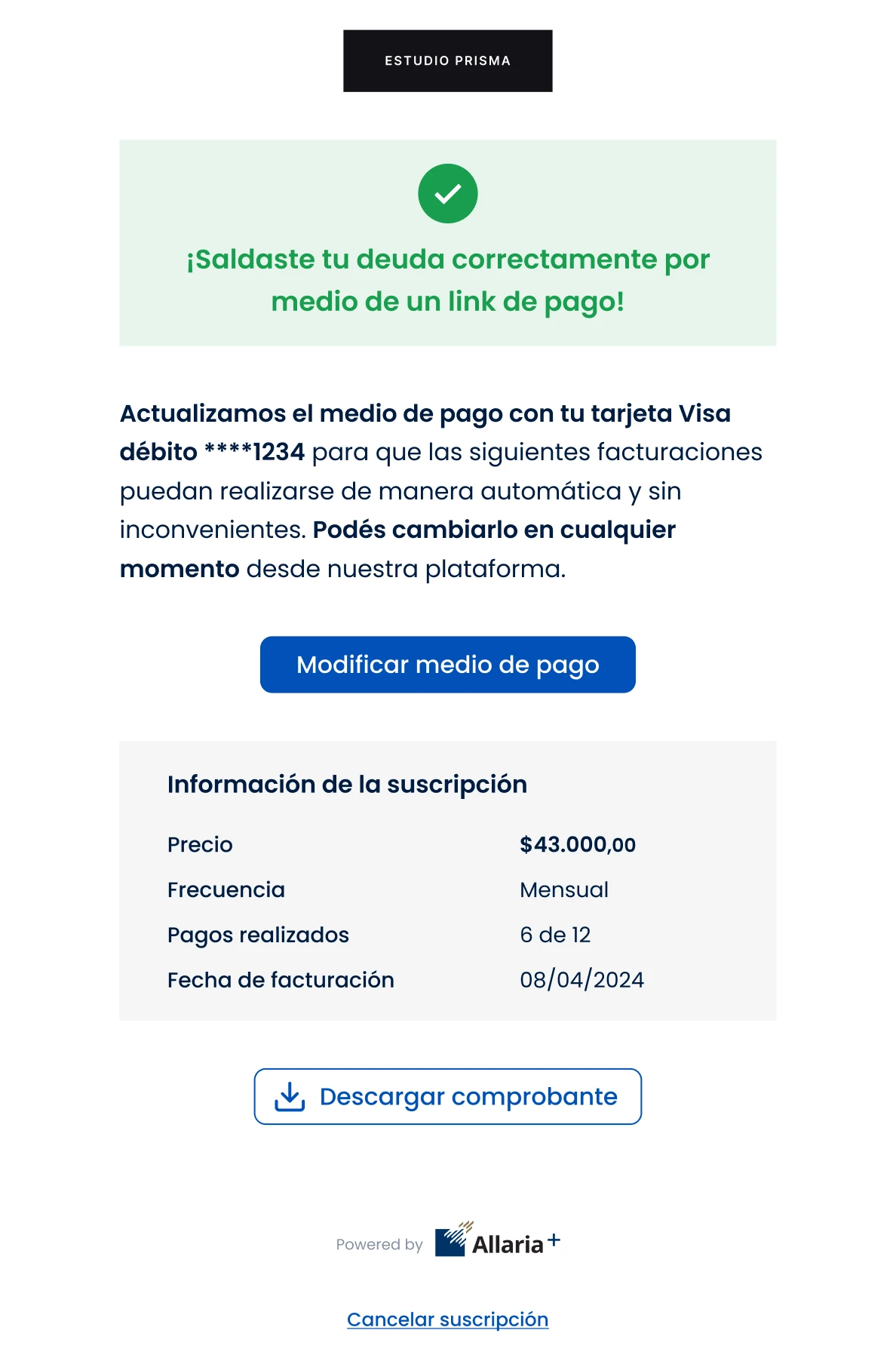
2La tarjeta nueva pasa a ser el medio de pago por defecto
La alternativa que descarté: usar la tarjeta nueva solo para saldar la deuda. Era una opción más simple de implementar, pero el cobro del mes siguiente se habría vuelto a rechazar con la tarjeta anterior y el suscriptor habría tenido que cargar otro medio de pago.
Alternativa descartada
- Ciclo 1•••• 1234Tarjeta vencidaRechazo permanente
- Saldar la deuda•••• 5678Tarjeta nueva, solo para esa deudaDeuda saldada
- Ciclo 2•••• 1234Se vuelve a cobrar con la viejaRechazo otra vez
Decisión
- Ciclo 1•••• 1234Tarjeta vencidaRechazo permanente
- Saldar la deuda•••• 5678La nueva queda como medio de pagoMedio actualizado
- Ciclo 2•••• 5678Cobro automático con la nuevaCobrado
Decisión 3Pagos realizados fuera de la plataforma
El problema: si un suscriptor saldaba su deuda por transferencia u otro medio externo, Allaria+ no lo registraba. La deuda seguía figurando como pago rechazado aunque la empresa ya hubiera cobrado.
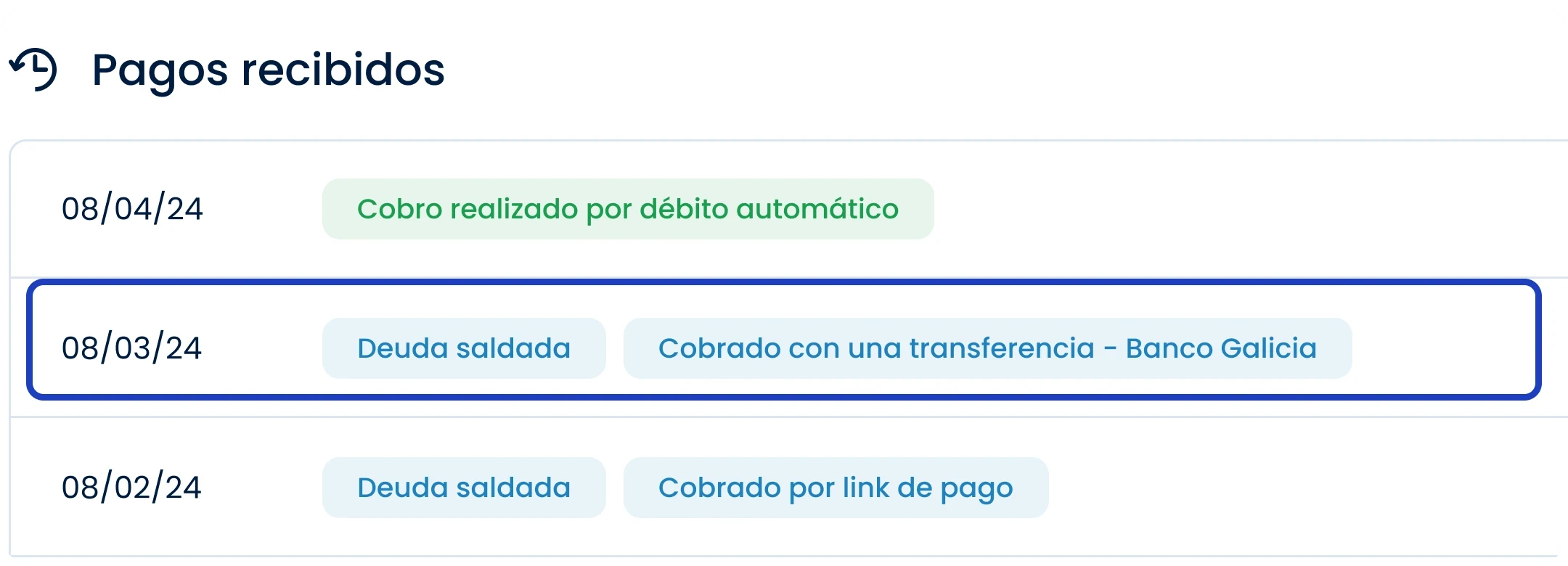
La decisión: la empresa cuenta con dos formas de saldar una deuda, de forma individual o para varios suscriptores a la vez:
- Link de pago de Allaria+, con fecha de vencimiento. El sistema registra el pago y marca la deuda como saldada automáticamente.
- Marcar la deuda como cobrada manualmente cuando el pago se realizó por otro medio, con un comentario obligatorio que indica cómo se cobró. El suscriptor recibe un email que confirma el pago.
Por qué: sin la opción manual, una deuda ya cobrada seguía figurando como pago rechazado, y la empresa perdía visibilidad real sobre sus deudas pendientes. El comentario obligatorio funciona como control: deja registro de dónde se cobró y por qué la deuda se marcó como saldada.
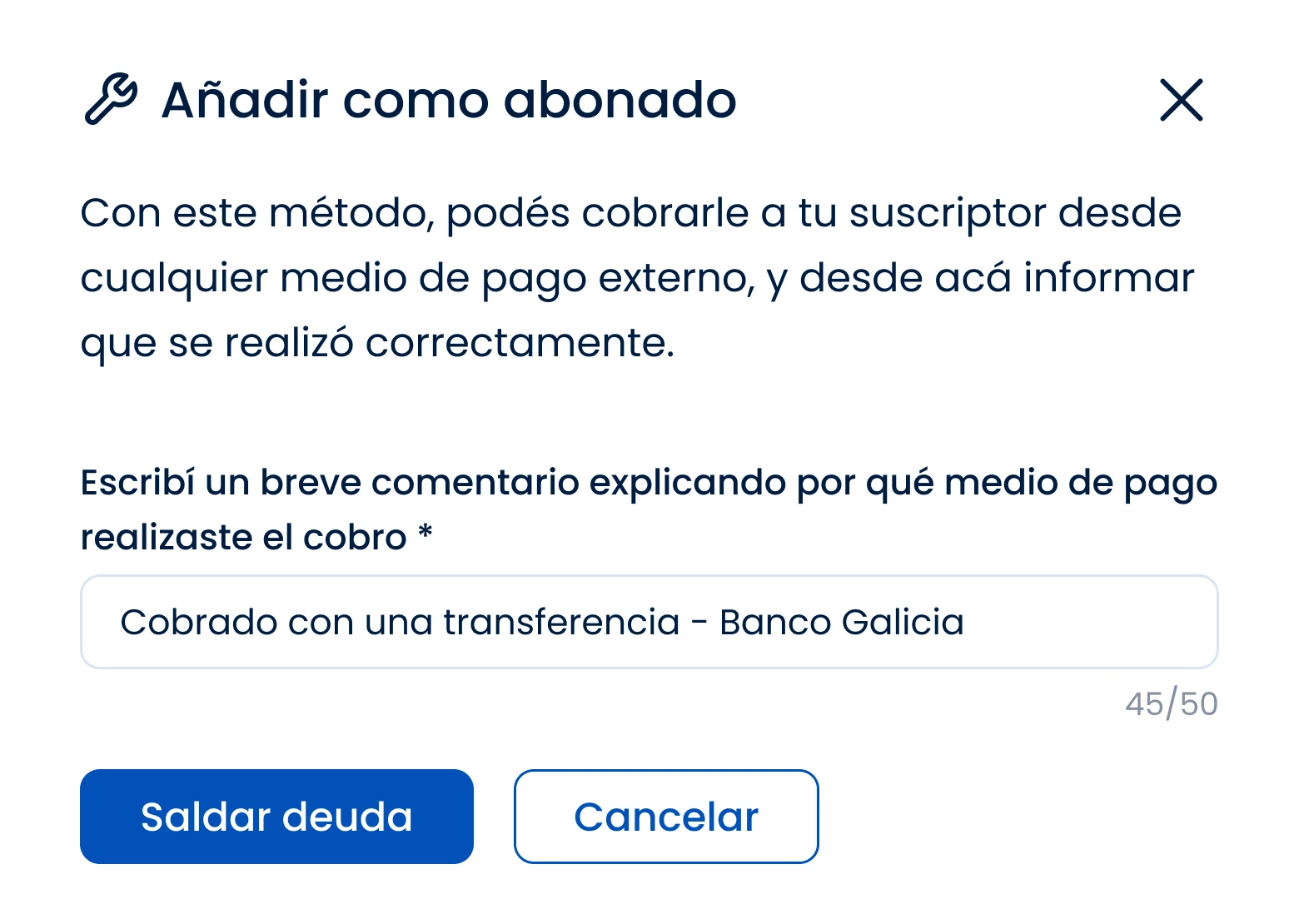
1Comentario obligatorio: deja registro de cómo se cobró
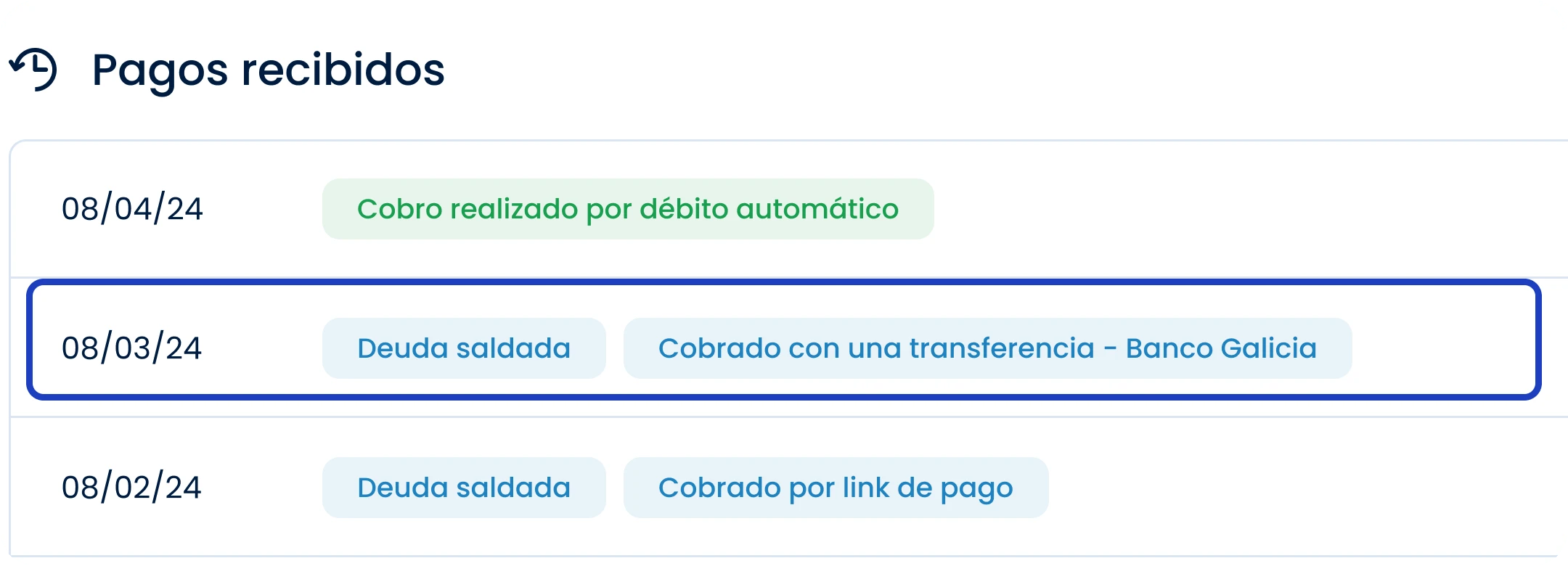
2El cobro queda registrado en el historial del cliente
Otro criterio: qué cambios de un plan se notifican
Cuando una empresa modifica un plan con suscriptores activos, no todos los cambios tienen el mismo impacto. Si cambia el monto o la fecha de facturación, el sistema ofrece notificar a los suscriptores por email, porque afecta cuánto y cuándo pagan. Si cambia el título, la imagen o la descripción, no se envía ninguna notificación.
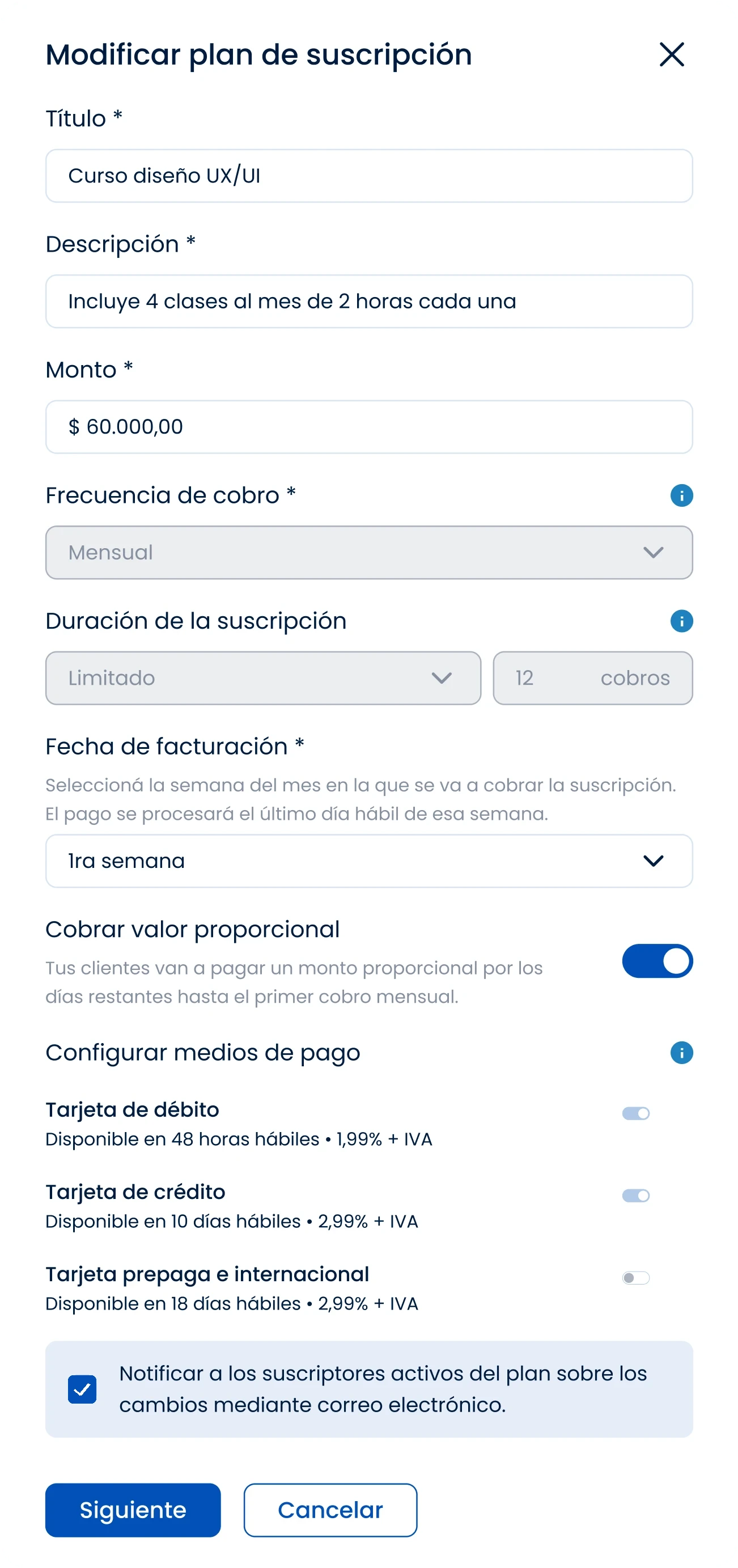
1Monto: cambio sensible
2Frecuencia bloqueada: se cambia desde soporte
3Fecha de facturación: cambio sensible
4Si hay cambios sensibles, se ofrece notificar a los suscriptores
Validación
Validamos con ECIPSA y otros clientes en tres momentos:
- Al inicioPresentación básica de la iniciativa
Junto con otros clientes, para confirmar que la propuesta resolvía su problema.
- Durante el diseñoEntrevista con ECIPSA
Sobre los detalles técnicos de su trabajo diario de cobranzas.
- Antes del handoffPrototipo avanzado
Con todas las funcionalidades del MVP, antes de pasar a desarrollo.
El feedback de ECIPSA generó dos cambios concretos en el diseño:
- ImportaciónAntesEl plan se elegía al final del flujoDespuésEl plan se elige en el mismo paso de la carga
- Historial de pagosAntesCada deuda se gestionaba desde su propio botónDespuésSelección múltiple y contadores de pagos y deudas
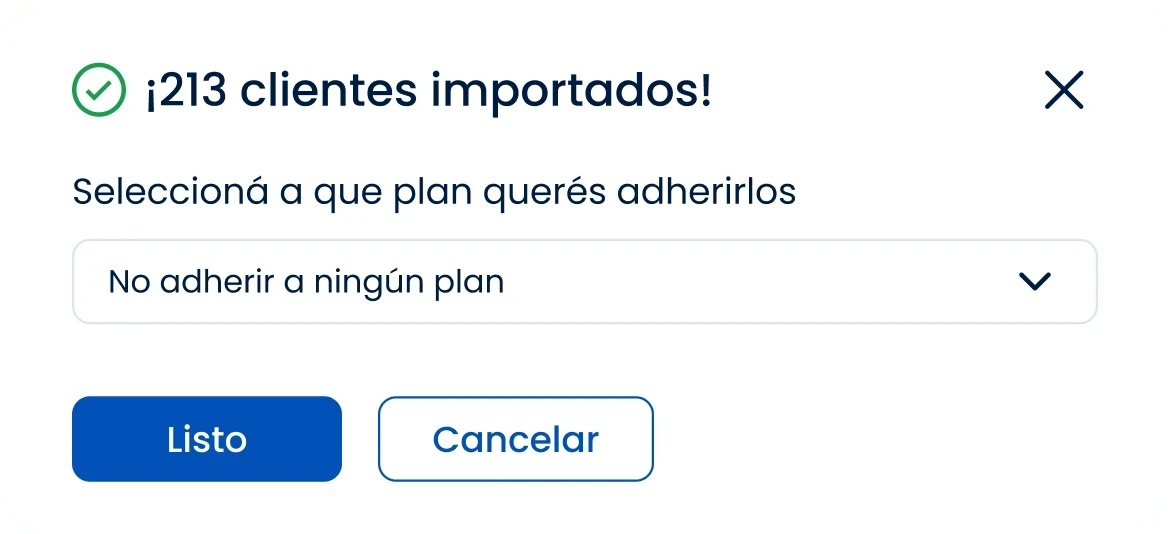
1El plan se elegía después de importar, en otro paso
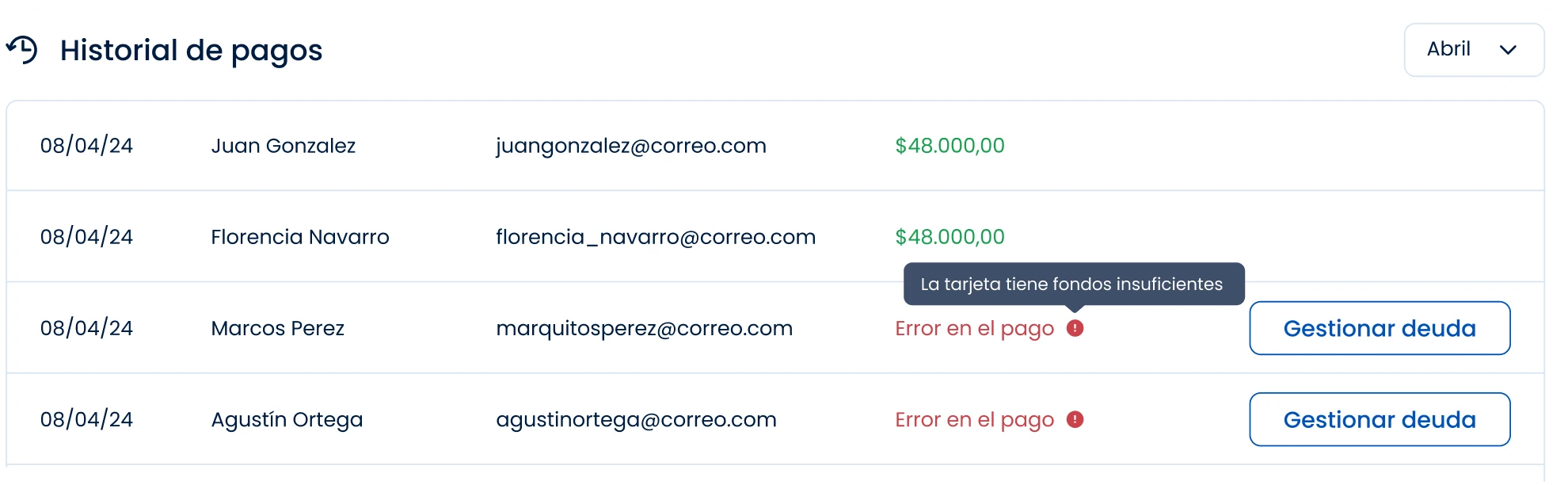
2Cada deuda se gestionaba desde su propio botón
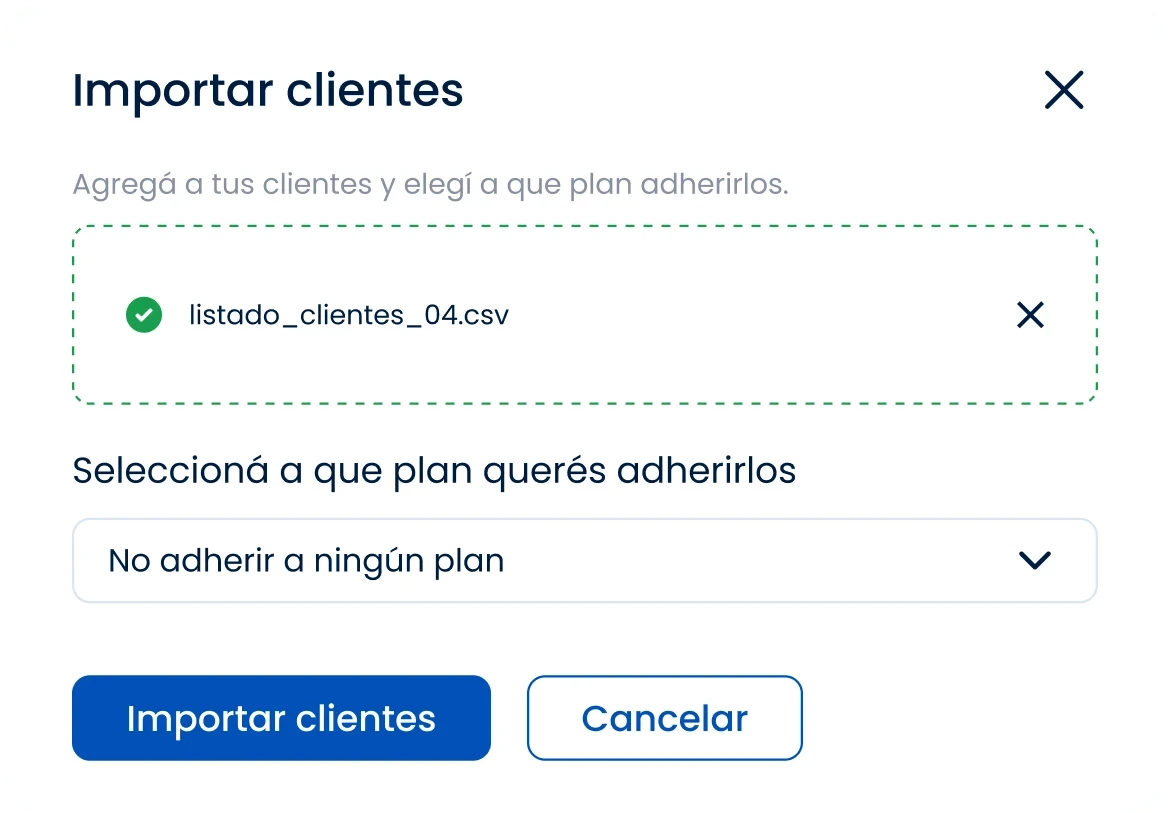
1El plan se elige en el mismo paso de la carga
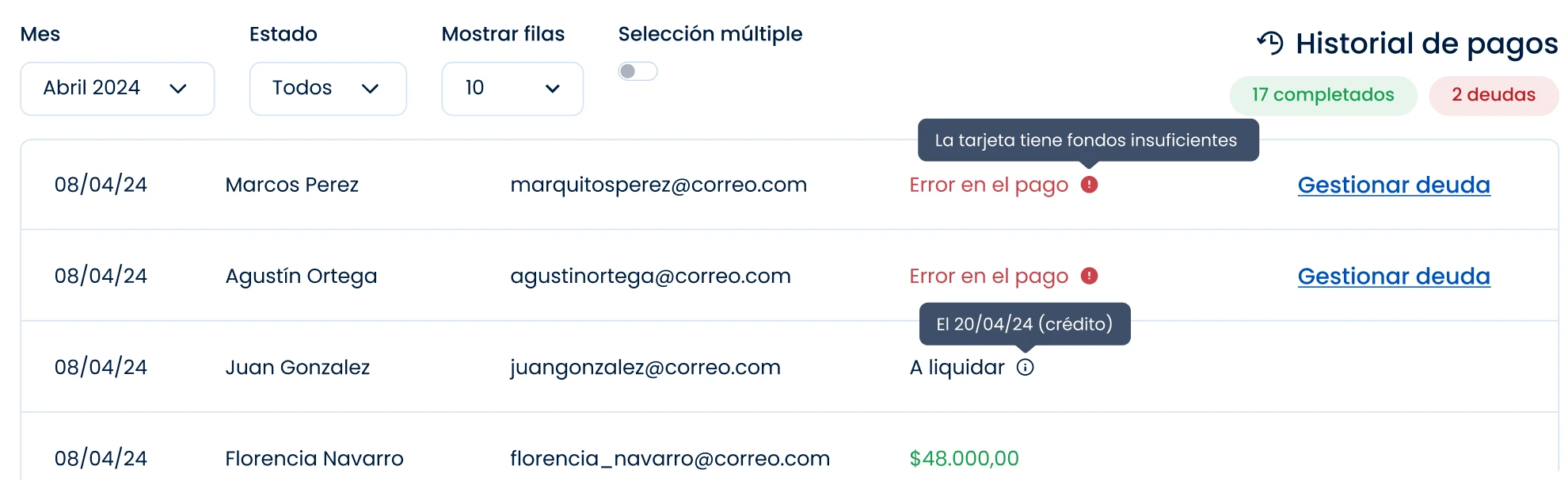
2Selección múltiple y contadores de pagos y deudas
Resultados
30+empresas
usan el producto, cada una con cientos de suscriptores
6meses
hasta el lanzamiento del MVP
2 semanas por ciclo
Automático
Antes, gestionar las deudas de cada ciclo llevaba unas 2 semanas de trabajo manual. Ahora el cobro es automático.
1sola carga
para adherir a todos los clientes al comenzar cada ciclo de facturación. Antes se hacía uno por uno.
- Las empresas pasaron de gestionar cada cobro manualmente a cobrar de forma automática, con intervención solo ante pagos rechazados.
- Después del lanzamiento sumamos las funcionalidades que habían quedado fuera del MVP (pausar o reactivar clientes y anular cobros) y mejoramos el diseño de los emails.
Mirando hacia atrás
Qué aprendí y cómo lo aplico hoy.
Qué pasó
Teníamos reuniones semanales con desarrollo para presentar los flujos, pero la validación técnica llegaba con cada flujo ya completo.
El costo
Algunas funcionalidades eran viables, pero requerían tanto desarrollo que quedaron fuera del MVP.
Cómo trabajo hoy
Valido cada pieza por separado con desarrollo, consultando limitaciones y tiempos antes de profundizar el diseño. Así, el recorte de alcance se define antes y con menos trabajo descartado.
Automatic debits for businesses
Subscription plans with automatic billing for businesses that were collecting payments by hand, one customer at a time.
- Product
- Allaria+, a payments and collections platform
- My role
- Product Designer, end to end
- Team
- 2 PMs, supporting UX and 12 engineers
- Timeline
- 6 months to MVP
- Outcome
- 30+ companies, with hundreds of subscribers each
The 30-second version
A construction company needed to collect recurring installments from its customers. Like many businesses, it tracked customers in an Excel sheet and chased each payment individually. I designed an automatic debit product for subscription plans: bulk customer import, automatic billing and failed-payment management. The key decisions came from around 12 interviews with construction companies, universities and training institutes, and with their collections teams.
- 12 interviewswith clients and collections teams
- 6 monthsto MVP launch
- 3 decisionsthat shaped the design
- 30+ companiesuse it today
Context and problem
The project started with a request from ECIPSA, a construction company that needed to collect recurring installments automatically. Allaria+'s business and product teams saw a broader opportunity and pitched the idea to other customers, including universities, training institutes and other construction companies, who showed the same interest.
In every case, recurring billing was managed by hand. For a business with hundreds of customers, that meant constant operational effort, and every payment that slipped through hit their revenue.
Before, every cycle, for every customer
With automatic debits
Every billing cycle, the business used an Excel sheet to track who owed what and when, reached out to each customer with a payment link or a transfer request, and checked receipts by hand.
The goal: let a business create a subscription plan, enroll its customers and bill them automatically every cycle (weekly, biweekly, monthly or yearly), stepping in only when a payment is declined.
My role and team
- Interviewed customers and their collections teams
- Built the flows and validations with Product and UX
- Walked frontend and backend through progress every week
- Designed the screens, the prototype and the emails
- Validated the prototype with ECIPSA before handoff
- PMs and salesProduct vision and customer needs
- CustomersAround 12 interviews with clients and collections teams
- Product and UXSupport in the interviews, flow design and validation
- EngineeringWeekly reviews with frontend and backend
Research findings
I interviewed customers and their collections staff to understand how they billed day to day and what they needed. At Allaria+ scale was always a given: our customers were large and each had many customers of their own. The interviews pinpointed the concrete problems.
- Customer databases already existed
Construction companies, universities and institutes had hundreds of customers in their own databases. They needed to bring them over in bulk, not one by one.
- Debt management had to scale too
When several payments were declined, resolving them one at a time wasn’t viable. They needed to handle several debts at once.
- Debts were settled through different channels
Some customers paid by payment link and others by bank transfer; the product had to support both.
These needs came up again and again across interviews. That's why bulk import and multi-debt management were part of the core product from the MVP.
Constraints
- Development time
We couldn’t build everything for launch. Pausing or reactivating customers and voiding charges moved after the MVP and were added in later iterations.
- Payments outside the platform
Allaria+ only recorded payments made through its own payment link. Bank transfers and other external payments weren’t recorded.
- Different decline reasons
A card can be declined for insufficient funds or because it’s expired or cancelled, and each case needed a different solution.
Three key decisions
Decision 1Bulk, but simple to use
The problem: businesses had hundreds of customers in their own systems. Entering them one by one would have blocked adoption.
The decision: I designed two ways to add customers: manually, for one-off additions, and in bulk, where the business uploads its list as a CSV and picks the plan to enroll them in. Several customers can also be enrolled in a plan in a single action.
Why: at Allaria+ scale was a requirement; the design challenge was delivering it without adding complexity. It was also the need mentioned most in interviews: without bulk import, the product automated billing but didn't solve getting started.
1Upload the list as a CSV
2Pick the plan in the same step
3Customers imported and enrolled
Decision 2Temporary vs. permanent declines
The problem: when a debit is declined, the cause determines the fix. A card with insufficient funds may work next month; an expired or cancelled card won't.
The decision: I designed a separate flow for each case.
- Temporary decline: the subscriber settles the debt with a payment link or another method, and future charges continue on the same card.
- Permanent decline: if they settle the debt with a new card, that card automatically becomes their payment method for future charges. One action resolves the debt and updates the payment method.
1Settles the debt and keeps the same card
2The new card becomes the default payment method
The alternative I ruled out: using the new card only to settle the debt. It was simpler to build, but next month's charge would have been declined again on the old card, and the subscriber would have had to add another payment method.
Discarded alternative
- Cycle 1•••• 1234Expired cardPermanent decline
- Settling the debt•••• 5678New card, for that debt onlyDebt settled
- Cycle 2•••• 1234Charged to the old card againDeclined again
Decision
- Cycle 1•••• 1234Expired cardPermanent decline
- Settling the debt•••• 5678The new card becomes the defaultMethod updated
- Cycle 2•••• 5678Automatic charge on the new cardCollected
Decision 3Payments made outside the platform
The problem: if a subscriber settled a debt by bank transfer or another external method, Allaria+ had no record of it. The debt still showed as a declined payment even though the business had been paid.
The decision: businesses get two ways to settle a debt, individually or for several subscribers at once:
- Allaria+ payment link, with an expiry date. The system records the payment and marks the debt as settled automatically.
- Mark the debt as paid manually when payment came through another channel, with a required comment explaining how it was collected. The subscriber gets an email confirming the payment.
Why: without the manual option, a debt that had already been paid kept showing as declined, and the business lost a true view of what was outstanding. The required comment works as a control: it leaves a record of where the money came in and why the debt was marked as settled.
1Required comment: records how it was paid
2The payment is logged in the customer’s history
Another call: which plan changes trigger a notice
When a business edits a plan with active subscribers, not every change carries the same weight. If the amount or billing date changes, the system offers to notify subscribers by email, because it affects how much and when they pay. Changes to the title, image or description don't trigger any notification.
1Amount: sensitive change
2Frequency locked: changed through support
3Billing date: sensitive change
4If anything sensitive changes, subscribers can be notified
Validation
We validated with ECIPSA and other customers at three moments:
- Early onBasic presentation of the initiative
With other customers, to confirm the proposal solved their problem.
- During designInterview with ECIPSA
About the technical details of their day-to-day collections work.
- Before handoffAdvanced prototype
With every MVP feature, before handing off to engineering.
ECIPSA’s feedback led to two concrete design changes:
- ImportBeforeThe plan was chosen at the end of the flowAfterThe plan is chosen in the same step as the upload
- Payment historyBeforeEach debt was handled from its own buttonAfterMulti-select plus counters for payments and debts
1The plan was picked after the import, in a separate step
2Each debt was handled from its own button
1The plan is picked in the same step as the upload
2Multi-select plus payment and debt counters
Outcomes
30+companies
use the product, each with hundreds of subscribers
6months
to MVP launch
2 weeks per cycle
Automatic
Managing debts used to take about two weeks of manual work every cycle. Now billing runs on its own.
1upload
to enroll every customer when a new billing cycle starts, instead of adding them one by one.
- Businesses went from managing every charge by hand to billing automatically, stepping in only when a payment is declined.
- After launch we added the features left out of the MVP (pausing or reactivating customers and voiding charges) and improved the email design.
Looking back
What I learned and how I apply it today.
What happened
We met with engineering every week to present the flows, but technical validation only came once each flow was complete.
The cost
Some features were feasible but needed so much development that they were cut from the MVP.
How I work now
I validate each piece with engineering on its own, checking constraints and timelines before going deep on the design. Scope gets cut earlier, with less work thrown away.

